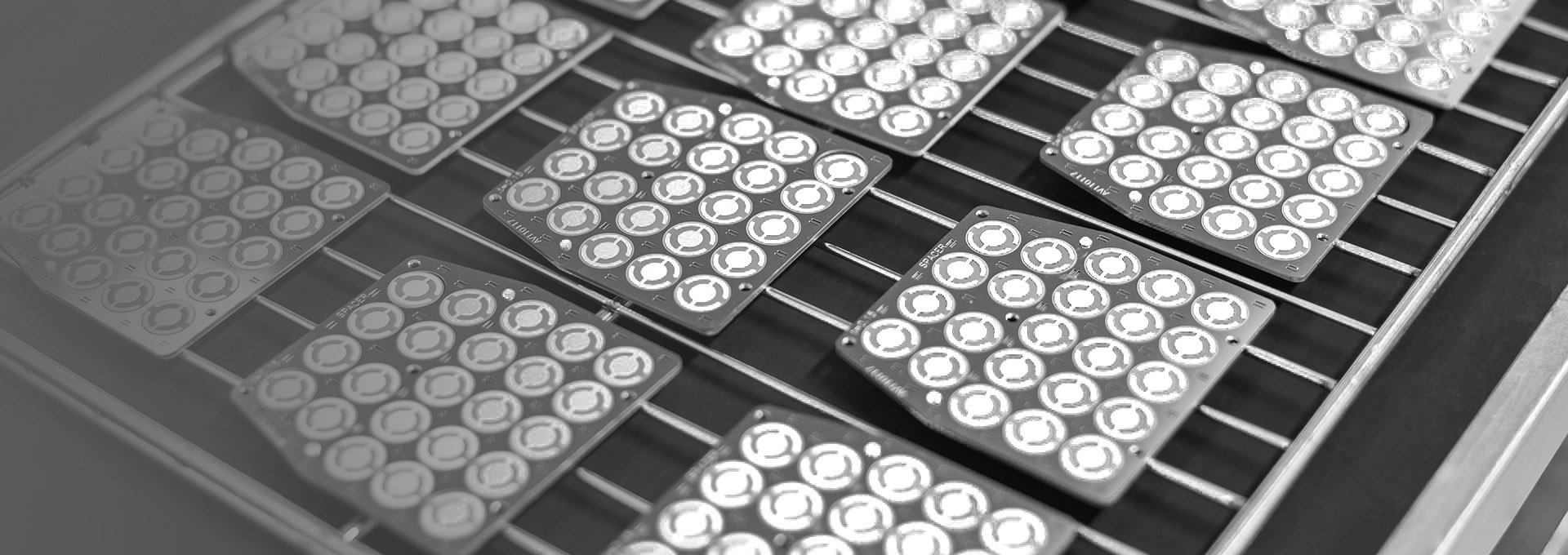
The thin films on our phone screens, eyeglass lenses, automotive glass, and camera lenses are all coated inside high-vacuum chambers.
Many people are curious: Why must coating be done under vacuum? Can't it be done under atmospheric pressure?
Today, let's dive into the fundamental logic of vacuum coating.
1. First, look at the data: How big is the difference between vacuum and atmosphere?
| Environment | Molecular Number Density |
|---|---|
| Atmospheric pressure | Approximately 3×10¹⁹ molecules/cm³ |
| High vacuum (10⁻⁴ Pa) | Approximately 3×10¹⁰ molecules/cm³ |
A difference of 9 orders of magnitude. Simply put: there are almost no gas molecules blocking the way under vacuum.
💡 Analogy: Like a highway with no vehicles blocking the way, coating material atoms can travel straight to the substrate without obstruction.
2. Without high vacuum, three fatal things happen
2.1 Coating material atoms cannot reach the substrate — they get knocked away midway
Coating material atoms evaporated or sputtered will continuously collide, scatter, and lose energy with air molecules in the atmosphere, failing to reach the glass surface.
- Under vacuum: Atoms travel in a straight line and directly reach the substrate, forming a uniform and dense film.
2.2 The film will be full of impurities, oxidation, and discoloration
The air contains large amounts of oxygen, moisture, and dust:
- High-temperature coating material becomes oxidized as soon as it emerges → the film turns yellow, black, and has inaccurate refractive index
- Moisture remains at the interface → poor film adhesion and easy peeling
- Under vacuum: Clean, no oxidation, no impurities — the film is transparent, dense, and stable.
2.3 The film will be porous, soft, and easily scratched
- Low vacuum deposition: Many voids, low density, poor strength
- High vacuum deposition: Atoms are tightly packed — high density, high hardness, wear-resistant
Simply put: What's done under atmospheric pressure is "powder"; what's done under vacuum is a true "film."
3. How does the vacuum in a coating machine come about?
A standard optical coating machine has a three-stage vacuum system:
| Stage | Equipment | Function |
|---|---|---|
| First stage | Mechanical pump | First pumps the chamber to low vacuum, removing most of the air |
| Second stage | Diffusion pump / Molecular pump | Continues pumping to high vacuum (10⁻⁴ Pa level) |
| Third stage | Cold trap | Further removes moisture and residual gases to ensure cleanliness |
✅ Only after reaching high vacuum can the coating process begin.
4. Two common deposition methods for optical coating
4.1 Electron beam evaporation (most common)
An electron beam strikes the coating material, melting and evaporating it at high temperature.
- Advantages: High purity, stable refractive index, suitable for optical multi-layer films
- Applications: Eyeglasses, lenses, optical filters — almost all are made using this method
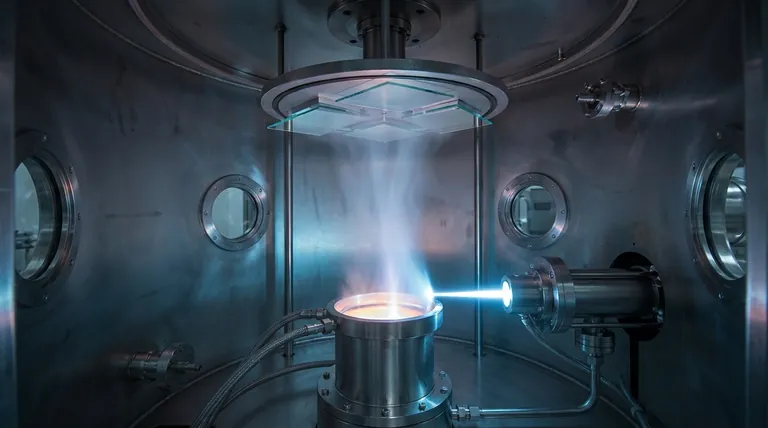
4.2 Sputtering (mainly magnetron sputtering)
High-energy ions bombard the target, "knocking" atoms out.
- Advantages: Extremely strong adhesion, high density, suitable for metal films and hard films
5. Summary: Vacuum is not an "option" — it's a "necessity"
Without high vacuum, there is no uniform, transparent, dense, wear-resistant, or stable optical film.
The role of vacuum:
| Role | Description |
|---|---|
| ✅ Straight-line arrival | Enables coating material atoms to reach the substrate in a straight line |
| ✅ Isolates impurities | Isolates oxygen and moisture, preventing oxidation and impurities |
| ✅ High density and hardness | Ensures high density, high hardness, and high adhesion of the film |
From phone screens to automotive HUDs, from eyeglasses to high-end lenses — all high-quality optical films rely on vacuum protection.